
The gap between the sink and the washing machine
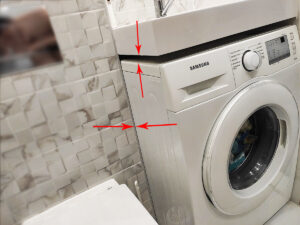 Installing a sink over a washing machine saves significant space in the home, but it requires precise calculations. One of the most important considerations is the clearance between the sink and the washing machine. How large should it be, how to properly install the appliance to leave room for utilities, and what clearances should be left between the washing machine and surrounding objects. Let's examine all these important points in detail.
Location of sink and washing machine
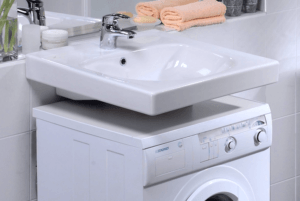
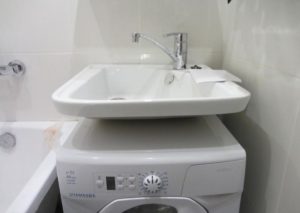
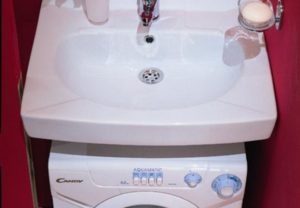
A sink designed for placement above a "home helper" is typically different from a regular sink with a shallower depth. The maximum height of such a sink is 20 centimeters—enough to completely enclose the washing machine underneath. Additionally, it's important to remember that the edges of the sink must extend beyond the perimeter of the washing machine's top panel by at least 2, and preferably 5, centimeters, to prevent moisture from the sink from getting into the appliance.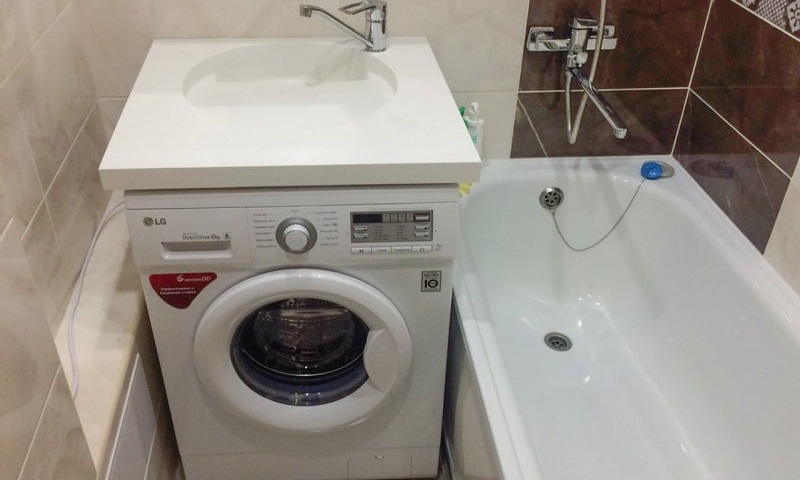
There should also be a gap between the sink and the washing machine. According to installation regulations, this should be 1 centimeter or more, but is usually 0.5 centimeters or less. This distance is necessary to prevent strong vibration from electrical equipment from damaging the fragile sink. The same applies to the side walls of the unit – there should also be a gap of at least 1 centimeter or more between the washing machine and surrounding objects, such as a shower stall or bathtub.
It is advisable to leave a distance of 2 centimeters or more between the washing machine and other objects, as the machine can bounce from side to side during the spin cycle, which can scratch or break fragile items in the bathroom.
There should also be a gap behind the washing machine—depending on the siphon, the distance should be 6 centimeters or more to allow for the siphon and hoses to be easily positioned behind the machine. If the sink or other structural features make it impossible to leave a gap behind the machine, you can cut a hole in the wall to create a small niche for all the hoses. Never block off the niche containing the hoses, as they must always be easily accessible.
The pros and cons of placing the sink above the washing machine
A sink over a washing machine is a great way to save space in a small home or studio apartment. This clever solution frees up space and can be used for other equipment or to create a convenient circulation area, such as in a hallway where washing machines are often located in small apartments. Furthermore, a decorative panel usually suits the interior much better than a standard, boring washing machine design.
However, there's a downside to combining a sink with a washing machine: the increased risk of using an electrical appliance. Experts advise never placing electrical appliances where they could come into contact with water. If a pipe bursts or the sink is damaged, the washing machine will be flooded, and water will seep into areas of the appliance that aren't protected from moisture.
If such an emergency occurs, not only can serious damage to the equipment occur, but the user may also receive an electric shock. To prevent this from happening, experts try to install only special sinks with a siphon installed closer to the wall, rather than in the center of the bowl. In this case, the leak will not damage the electrical device. This type of sink is often called a "water lily" sink.
It's also worth noting that washing machines with a standard height of 85 centimeters are inconvenient to install under a sink. In this case, it will be difficult to get close to the sink, as the appliance's panel will be in the way, and the sheer height of the machine itself can be inconvenient for children and shorter people.
Where will the drain be located near the sink?
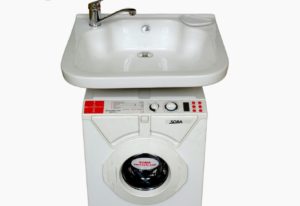
When the gap between the sink and washing machine is only 1 centimeter or less, it's unclear where the drain should be. The answer is simple: some washing machines have an offset drain—it's located in the corner between the back and side walls, hidden by a removable soap dish. In this case, the sink bottom should be flat so it can be placed on top of the washing machine. The protruding part with the drain hole is located behind the washing machine, which further enhances the safety of the design. Another characteristic of these sinks is their different depths—the front one is shallower, while the back one is approximately 5 centimeters deeper.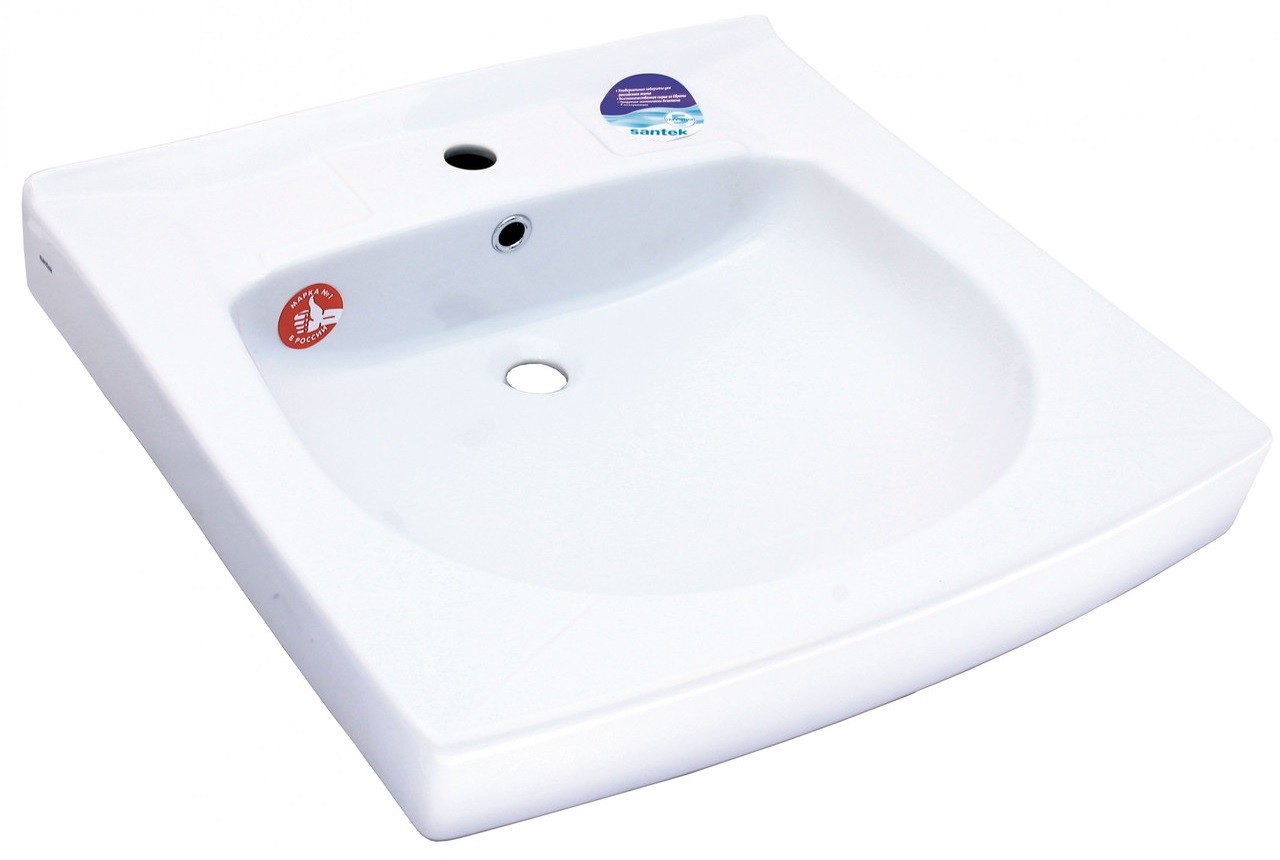
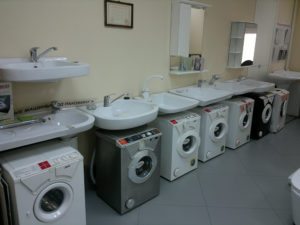
Much more common are standard "lily pad" sinks, which feature a back-centered drain. These are also very convenient, as they prevent moisture from entering areas of the washing machine that lack moisture protection. There are both domestically produced models, such as the "Santek Pilot-50," which costs around $36, and sinks from Finland, Ido Aniara, which cost around $230. Products from the Belarusian brand Belux also perform well, such as the "Eureka" sink, which features a corner-mounted faucet and a removable panel that conceals the drain.
Thus, today it is not difficult to find a sink with a convenient drain, organized in such a way that the washing machine is safe.
Interesting:
Readers' comments
Headings
Washing machine repair




For buyers




For users


Dishwasher




Add a comment