
Can I wash it with liquid laundry soap?
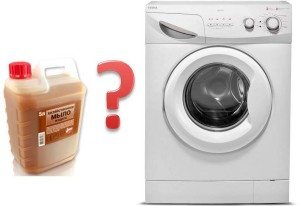 Every good housewife has a good bar of laundry soap in her arsenal. Its cleaning properties have been well-known for centuries, and its formula not only disinfects but also hypoallergenic. Today, many people can't imagine life without a washing machine, and therefore forget about this "miracle product" that our grandmothers used to wash clothes by hand. Laundry soap is available not only in bars but also in liquid form. So, the question arises: can this liquid soap be used in a washing machine, and can it be made at home? We'll try to answer these questions.
Detergent Review: Chemical Composition
Laundry soap is considered the most natural; it contains two groups of substances: sodium salt and fatty acid residues. Soaps with a predominance of unsaturated fatty acids (oleic or linolenic) quickly become rancid, but cope well with stains in cool water. Based on the percentage of fatty acids in the soap, it is divided into three categories:
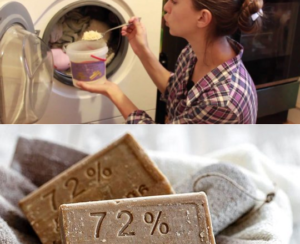
- The first is soap with an acid content of more than 70.5% (often found in laundry soap with 72%);
- The second is soap with an acid content of 69%;
- The third is soap with an acid content of 64%.
Important! Category 1 soap has the best cleaning properties.
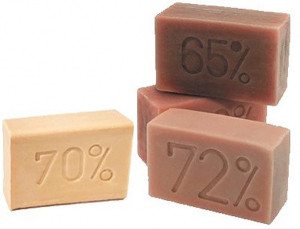 Low-grade soaps may contain rosin, which promotes foaming and dissolves in cold water, as well as extending the product's shelf life. Soapstock may also be present. This substance is obtained by refining fats and oils with an alkaline solution. Soapstock makes the soap hard, but if the soapstock is of poor quality, the soap will not only be hard but also darker in color and have an unpleasant odor.
This is exactly the composition of laundry soap in Soviet times. Despite the external similarity, Russian-made soap differs from Soviet soap in composition. Synthetic acids or other fatty acids with the same properties can be used as residues of natural fatty acids. 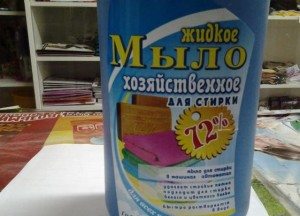 Safety certificate, according to GOST. Foreign laundry soap differs from Russian soap, which contains palm and coconut oils, sodium silicate, and rosin, making it more lathering and less sticky.
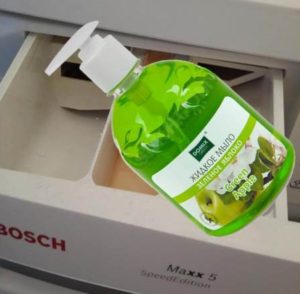
As for the liquid form of laundry soap, it differs even more from its predecessor. Although manufacturers claim that the liquid version has the same composition, a closer look at the small print on the packaging reveals that it contains toxic surfactants (surface-active agents). Therefore, this composition of substances can be considered a washing gel rather than laundry soap.
Real laundry soap cannot be in liquid form; it is impossible to make it that way using technology.
Strengths and weaknesses of soap
Laundry soap has a wide range of uses, but it's most often used for hand washing and dishwashing. What are the benefits of laundry soap?
- is a good disinfectant and anti-allergenic agent;
- removes organic stains well without damaging the fabric;
- has a whitening effect;
- has a low price (economical).
 As for the disadvantages of laundry soap, there are practically none. It's worth noting that laundry soap can't remove stains of inorganic origin, and frequent use of such soap on colored items can make them appear duller.
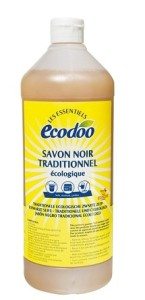
Liquid laundry soap isn't as effective at cleaning clothes, but it's excellent at washing dishes. However, it's not exactly eco-friendly, except for expensive foreign-made soaps. For example, the French liquid laundry soap EcoDoo. It contains water, olive and linseed oil-based soap, lavender oil, caramel, and natural gum. Its biodegradable formula contains no fragrances, petrochemicals or preservatives. According to consumer reviews, washing with this soap is no different from washing with regular washing powder. However, this soap costs twice as much as regular washing powder.
How to use soap: instructions
 Everyone knows how to use laundry soap for hand washing. Simply lather the item thoroughly and generously with soap, wait a couple of hours, and then rinse thoroughly. Lightly soiled items can be washed in water with grated laundry soap dissolved in water. But what about a washing machine? Can I use dry or liquid laundry soap?
Imagine: bar soap turns into a sticky, viscous mass when dissolved in water. What happens if this soap doesn't dissolve well in the water in the washing machine drum? Naturally, it will stick to the items in the drum. It will adhere to the drum walls and settle on the heating element, which can lead to heating element failure. If you place grated soap in the detergent dispenser instead of the drum, it will stick to the walls of the hose.
Liquid laundry soap is also not recommended for use in the washing machine, especially in the detergent compartment. While it's just as effective as regular liquid detergent, it can negatively impact the machine's performance.
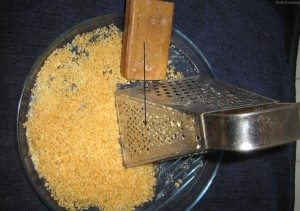 However, you can use laundry soap in your washing machine, but only if you prepare it into a washing paste correctly. Here's one of the simplest and most effective recipes:
- you need to take 200 g of laundry soap and grate it on a fine grater;
- Pour some boiling water into a saucepan and add soap;
- put on low heat and wait, While the soap is dissolving, you need to stir constantly and do not let the mixture boil;
- now in a separate container, dissolve 400 g of soda ash in a small amount of water;
- then add soda to the soap and mix everything thoroughly until the ingredients are completely dissolved;
- cool the resulting mass;
- add 12 drops of essential oil and mix well again;
Note! You can use a blender to whip the mixture, which will ensure there are no lumps that could ruin the washing results.
- Cool the washing paste and pour it into a convenient container, such as a bottle of conditioner.
This laundry gel is used in the same way as store-bought detergent. For lightly soiled laundry, pour 100 ml of gel into a measuring container; for heavily soiled laundry, pour 150-200 g, depending on the load. Place the container with the laundry in the drum. This method is advantageous because laundry soap dissolves easily in water and rinses out easily. You can use a paste made from laundry soap on any fabric except wool. And making the gel, as you can see, is very simple.
Important! If the laundry soap solution turns out too thick, like a paste, dissolve it in water before using it in the machine.
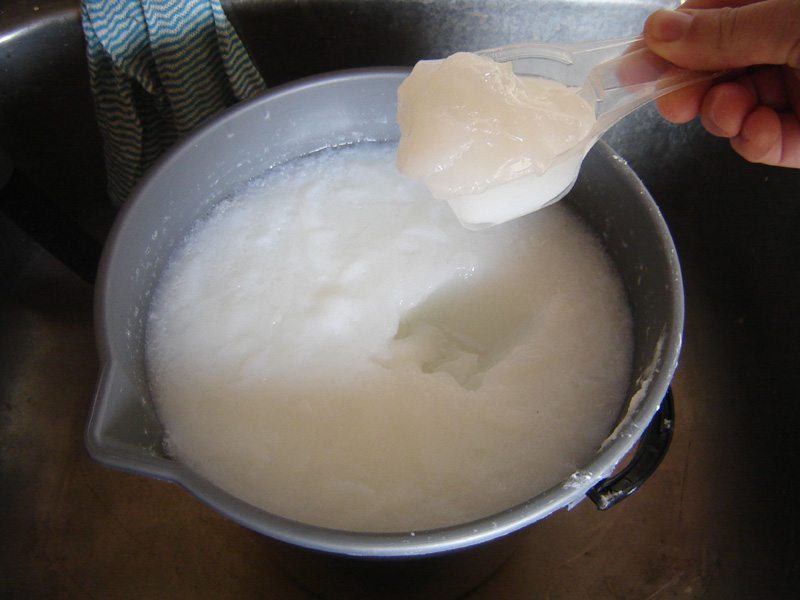 In conclusion, we note that if you regularly clean your washing machine citric acid, a laundry soap-based product won't harm the machine's parts. However, if you wash your laundry with shavings of laundry soap or a liquid imitation, the results are unpredictable, and no amount of lemon juice will save your laundry. So, before you experiment, use your brain and think carefully about whether it's worth it.
Interesting:
7 reader comments
Add a comment
Headings
Washing machine repair




For buyers




For users


Dishwasher




I liked it, I will definitely use it, wash it and write about it.
I saw this liquid laundry soap today. The ingredients confused me. It didn't look like regular soap. Now that I've read the article, I understand. It's best to make this gel yourself! The most natural thing will be
A wonderful product, the entire drainage system is clogged, we will wash with laundry soap - but now by hand!
Well, it's clearly not from this gel. I've been washing my hair for two years now, no problems.
Get your socks out of there!
I wash my blacks with Zos soap, which comes in 5-liter containers. It's been fine for two or three years now.
I mix soap, baking soda, citric acid, and washing powder and wash. It works great. I have a top-loading machine.