
Grease stains on clothes after washing
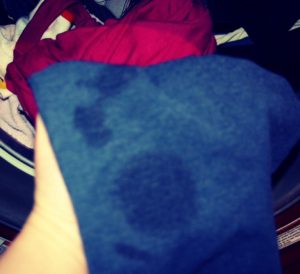 Grease stains appear on clothes after washing only in one case: when the machine was loaded with oil-stained laundry. Even a high-temperature cycle won't remove grease; in fact, it will only make the situation worse, and the dirt will penetrate deep into the fibers. Removing a stubborn grease stain is still possible, but it will be much more difficult. Now let's figure out how.
Let's start with the "heavy artillery"
If you notice an oil stain that's grown larger after washing, don't panic—it can still be fixed. But it's best not to delay; take immediate action. Forget half-measures and turn to the "heavy artillery"—modern stain removers.
Use a stain remover that matches the color and fabric type of your garment. Then, following the instructions on the packaging, begin removing the grease.
- Dilute the product to the required dosage.
- Test the stain remover on a special patch (it comes with the garment) or on an inconspicuous area (the inside of a cuff or lapel).
- Apply to a white cloth or cotton wool.
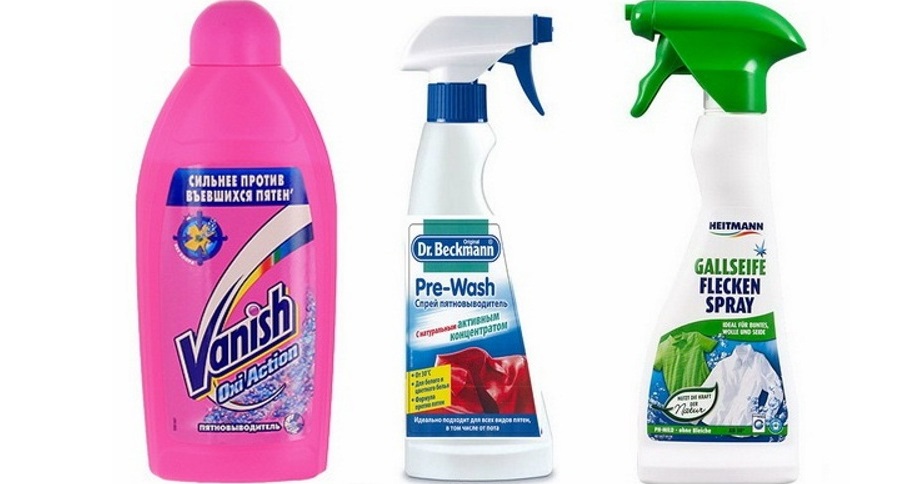
- Treat the stain, working from the edges towards the middle (otherwise you may spread the dirt further).
Before using the stain remover, carefully read the instructions on the packaging!
Before using a stain remover, it's important to understand what to do and in what order. If the stain is deeply embedded in the fabric, it's best to rub longer to enhance the cleaning effect. Be careful with colored and black linens, as the aggressive composition may cause them to fade.
Methods for removing old stains
If you don't have any stain remover at home, or its harsh formula doesn't inspire confidence, you'll have to resort to tried-and-true homemade methods. The beauty of these is that they're cheaper and safer than store-bought alternatives, and they use readily available cleaning agents. The following products and preparations can help remove even stubborn grease:
- laundry soap;
- starch;
- glycerol;
- alcohol;
- gasoline or acetone;
- salt.
It's best to start with laundry soap, as this method is the easiest and safest, yet equally effective. Take a 72% soap bar, lather the stain, and let the item sit for 2-3 hours. Afterward, wash the garment again. If greasy stains are still visible, treat it again. Oily stains can be removed in a similar manner with dishwashing gel.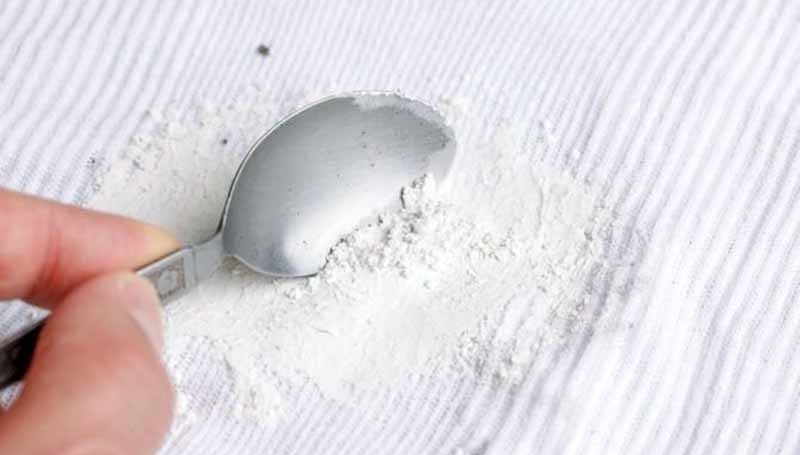
It's a good idea to soften the stain before using dishwashing gel or laundry soap to enhance the effectiveness of the product. To do this, smooth out the stained area, lift it over a bowl of boiling water, and hold it there for 10-30 minutes. Using a steamer or iron will also achieve the same effect.
To remove grease stains, use laundry soap, dishwashing gel, glycerin and rubbing alcohol.
If a grease stain occurs on delicate clothing, such as a coat, down jacket, leather jacket, or an item made of wool, cashmere, or nubuck, it's best to use hot starch. Its advantage is that it doesn't require water, allowing for dry cleaning. Here's how to proceed:
- pour starch into a dry container and heat it;
- we put a napkin under the clothes;
- sprinkle the stain with hot starch;
- We watch how the starch absorbs dirt when it cools;
- We remove the oil-soaked grains and replace them with new ones.
Pharmaceutical glycerin is effective at removing grease stains. The procedure is simple: apply drops to the affected area, leave for 30 minutes, and then rinse with a damp cloth. Even better, mix it with ammonia and water, using half a tablespoon of each. Apply the mixed "ointment" to the oil and assess the results after 10 minutes.
Another effective remedy is rubbing alcohol. Soak a cotton swab in it, dab it on the stain, wait 30-40 minutes, and rinse. Repeat the process until the grease is completely removed. However, this method has two drawbacks: first, not all fabrics can withstand the alcohol's onslaught, and second, the distinctive odor will only dissipate after 3-4 hours.
If a grease stain appears on clothing made of rough and easy-to-clean fabrics, you can try more aggressive and effective cleaners. These include gasoline, acetone, and nail polish remover made from these materials. Choose one and begin cleaning:
- wet a cloth and place it under the stain;
- We treat the stain itself with another cloth soaked in the product;
- rub until the dirt leaves the fabric;
- We wash the item.
Regular table salt can also remove stubborn stains. More specifically, soak the stained garment in a hot salt solution diluted at a ratio of 5 tablespoons to 1 liter. If a large area is contaminated, the concentration and volume can be increased. Next, simply immerse the entire garment in the liquid and leave it there until the oil is removed from the fabric. Then, wash the affected area again.
For more stubborn grease stains
A fresh stain is much easier to remove. This is defined as a stain that was placed on the surface within three hours. A freshly soiled area can be cleaned in minutes, using almost any detergent and a short wash cycle. However, if the grease isn't removed, loading the stained item into the washing machine and running a cycle is a bad idea. Again, running the cycle will only worsen the problem and allow the oil to penetrate deeper into the fabric.
It's best not to tempt fate and remove the stain before the main wash cycle. A few household detergents will do the trick. When choosing a cleaner, be sure to consider the type and color of the stained fabric.
- Dishwashing gel. Dishwashing liquid is the perfect aid in combating greasy stains. It contains surfactants that are effective at removing edible grease. Simply wet the stained area, lather it with soap, rub it, and wait. If the first attempt doesn't work, you'll have to repeat the process.Only after the oil has been removed can you complete the cleaning process by washing it in a machine.
- Shampoo for oily hair. It's an excellent option for cleaning delicate fabrics, such as wool, silk, velvet, and chiffon. It's much gentler than dishwashing gel, providing gentle and safe care. Simply gently buff the affected area, set the item aside for 20-30 minutes, and then hand wash in water at 30-40 degrees Celsius.
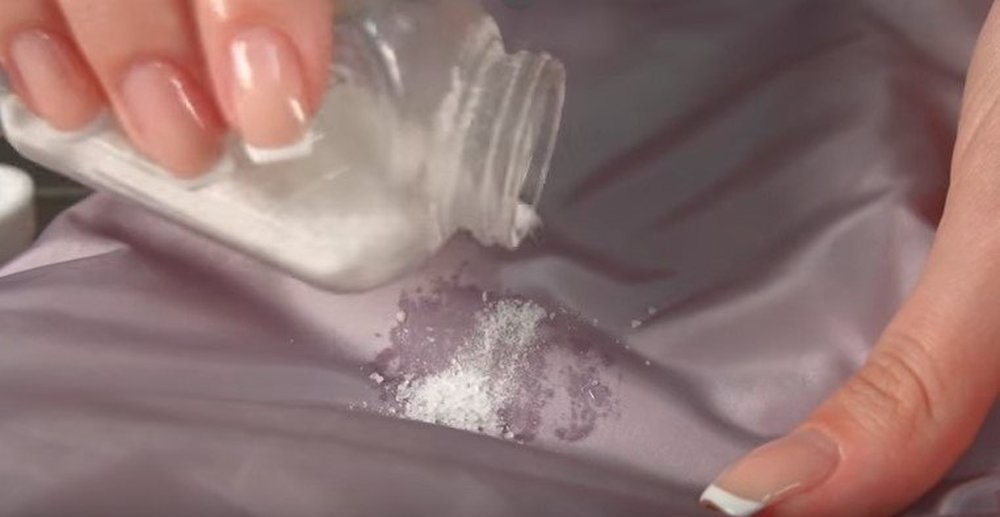
- Salt. Effective against fresh grease, berry, wine, and tea stains. Simply sprinkle the salt onto the affected area and gently rub it in. Within a few minutes, the grains will absorb the dirt. Brush them off the fabric, then sprinkle a fresh layer of salt onto the stain. Once the grease stain is completely gone, you can begin the main wash.
- Ammonia. Mix rubbing alcohol and warm water, using 1 teaspoon per half cup. Dip a cotton ball into the mixture and blot the stain thoroughly. To seal the effect, iron the stain through a damp cloth.
A recent grease stain can be removed with salt, shampoo, talcum powder, chalk or toothpaste.
- Toothpaste. Simply apply a thin layer, leave for 2-3 hours, and wash. If the clothing is colored, it's best to use a gel-based formula.
- Chalk. It's safe, so it's widely used for cleaning linen and cotton fabrics. Chop it up, sprinkle it on the stain, wait 2-3 hours, and then rinse with a damp cloth. Then wash as usual.
- Talc and starch. Any of these products is ideal for gently cleaning delicate fabrics. Application is simple: place the laundry on a flat surface, sprinkle with powder, cover with a cloth, and iron at a medium temperature. Then, place something heavy on the grease stain for 3-5 hours.
- Bread. Effective for removing grease from fleecy materials, velvet, or wool. We take a fresh “white” loaf of bread, chip off the crumb, and then soak the stain with it.Once the oil has been absorbed completely, wash without adding powder.
- Tracing paper. A universal product suitable for virtually all materials. The stain removal process is simple: straighten the item, place a sheet of paper between the inside and outside, and then iron. After a few passes, the oil will transfer to the paper.
After one cycle in the drum, grease penetrates deeper into the fabric, making removal more difficult. However, even stubborn grease stains can be removed if you choose the right product and follow the instructions.
Interesting:
Readers' comments
Headings
Washing machine repair




For buyers




For users


Dishwasher




Add a comment