
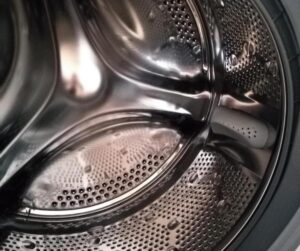
What metal is the drum in a washing machine made of?
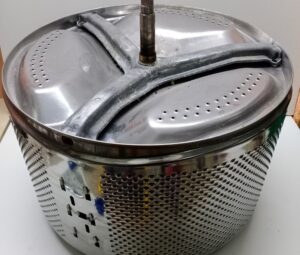 It's frustrating when a household appliance, once a faithful servant, finally breaks down. But even this situation can be profitable if you scrap it. The metal in a washing machine's drum deserves close attention, as it's known to be made of valuable stainless steel. However, recycling centers don't particularly value it, treating it as ordinary ferrous metal. So what are modern, corrosion-resistant washing machine drums actually made of?
What alloy is used to make the drum?
Let's take a look at the alloys that form the basis of washing machine drums and prevent rusting over the years. Manufacturers typically use ferritic alloys, which include any corrosion-resistant chromium steel, where the chromium concentration can be up to 30%. These alloys exhibit enhanced ferromagnetic properties, allowing them to be magnetized even at extremely low temperatures outside the magnetic field. Such an alloy boasts:
- its very considerable strength;
- excellent plasticity;
- oxidation resistance.
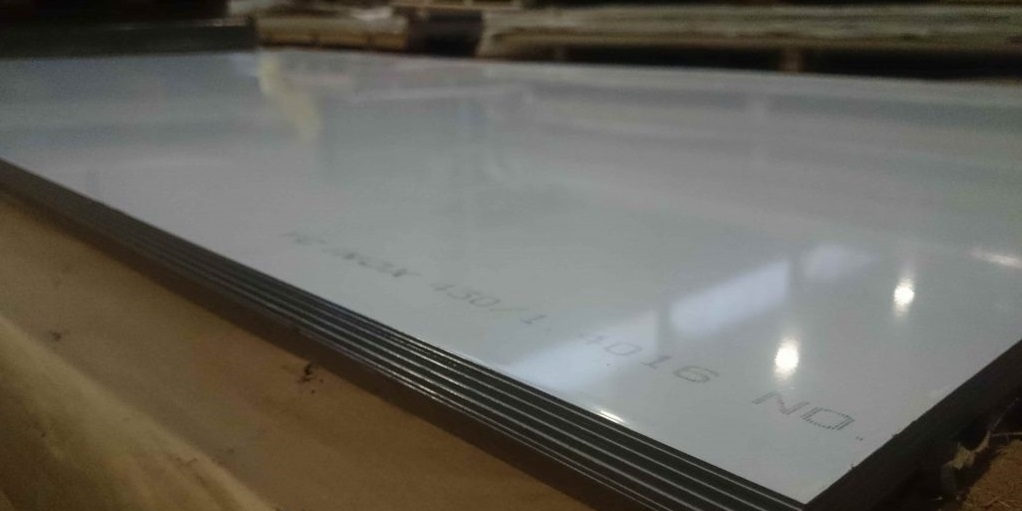
According to the American Steel and Alloy Institute's AISI standard, ferrites are classified in class 4XX. Specifically, we're interested in type 430, the most common alloy used in washing machine drums worldwide. Type 430 steel is incredibly ductile, making it easier to weld and machine to shape the drum.
Products made from this alloy perform well in high humidity, continuous ultraviolet radiation, sub-zero temperatures, and other harsh operating conditions.
This alloy is most often marketed as 12X17 steel in terms of its chemical composition—the Russian equivalent of AISI 430. However, foreign ferrite has a low carbon concentration, meaning it doesn't require additional titanium stabilization. Its low carbon content ensures the alloy's resistance to intergranular corrosion at high temperatures and also provides excellent weldability. 430 alloy is susceptible to intense carbide formation only at temperatures above 1000 degrees Celsius, making it a highly reliable material for everyday use.
The characteristics of AISI 430 allow it to be considered an improved analogue of the 08Kh17T alloy, which is recommended by GOST as a replacement for 12Kh18N10T and 12Kh18N9T steels. Furthermore, this ferrite is insensitive to intergranular corrosion at temperatures between 500 and 800 degrees Celsius, and, compared to its analogues, it is less susceptible to chloride cracking under high loads.
And considering that it is also significantly cheaper than the AISI 300 grade, which has a high nickel content, it is not surprising that the 430 alloy is mainly chosen by large manufacturers of household appliances. This steel offers an ideal balance between price and quality, allowing manufacturers to save on washing machine drums.
Why is the drum not accepted as "stainless steel"?
But if the drum is made of this stainless alloy, which is so good, why isn't it accepted as stainless steel? Typically, collection center employees simply scrape the drum with a rotating grinder cutting wheel, and then, based on the spark, determine that the stainless steel is of poor quality, qualifying only as ferrous metal. How should we interpret this behavior from the collection center specialist? Is this another scam, an error by an unqualified employee, or a perfectly reasonable requirement? To answer this question, let's take a closer look at the composition of alloy 430.
- Approximately 81% iron.
- About 16% chromium.
- Up to 0.8% silicon.
- Up to 0.8% manganese.
- Up to 0.4% phosphorus.
- Up to 0.3% sulfur.
- Up to 0.12% carbon.
- Up to 0.02% nickel.
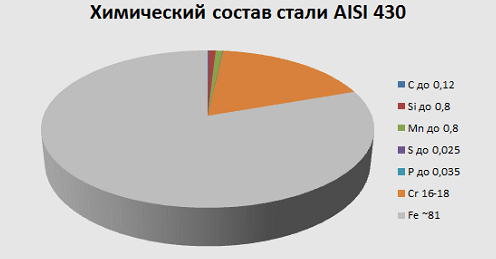
The price of metal at recycling centers is determined by the presence of expensive components, namely chromium and nickel. Because 430 AISI alloy has a low chromium content and significantly less nickel than any other element, this metal is often rejected at a higher price. Silicon is also important to consider, as the lower the amount in the alloy, the more valuable the metal will be when recycled. Silicon content is determined by a grinder, so such a test of steel will clearly show its low price.
As we mentioned above, companies strive to select high-quality yet affordable materials, which is why they choose 430 AISI metal. It has a high silicon content and an incredibly low chromium content. This is why it's so uneconomical to take to a recycling center, unlike other washing machine components and the body, which boast a high price tag simply due to their considerable weight.
Interesting:


Readers' comments
Headings
Washing machine repair




For buyers




For users


Dishwasher




Add a comment