
Which voltage stabilizer should I choose for my washing machine?
 Modern washing machines are characterized by sensitive electronics—the slightest surge in the power grid can cause their destruction. Meanwhile, power supply to apartments and homes remains unstable: due to the abundance of appliances, demand for electricity increases, substations can't cope, and transformers fail. As a result, voltage fluctuations are detected on the line, and circuit breakers connected to the outlets burn out. You can protect your washing machine and other household appliances by simply choosing a voltage stabilizer and connecting it to the circuit. All that's left to do is explore the available options.
How to choose a device?
Choosing a stabilizer for a washing machine is no easy task. It's all about the variety of options available from manufacturers: there are many devices available with varying power, types, and prices. To avoid making a mistake, it is worth studying the characteristics of the devices and other important parameters. There are several types of stabilizers available: relay, electronic, electromechanical, inverter, and ferromagnetic. Let's take a closer look at each option.
- Relay. A simple and inexpensive option is a toroidal transformer with multiple outputs and relay switching. Disadvantages include constant LED flickering and poor equalization accuracy. Another drawback is increased noise—the device periodically makes a clicking sound.
- Electronic. These are thyristor or triac transformers with step-type voltage regulation. Due to their resistance to electrical grid loads and inrush currents, regulation is extremely smooth and silent. There is also no lamp flickering, as there are more equalization levels than with relay devices. However, this equipment has several drawbacks: high cost, low equalization accuracy, and the potential for radio interference.
Electronic and inverter stabilizers are considered the most suitable for washing machines.
- Electromechanical. Also known as servo-driven. Here, the contact runner moves on a circular transformer, smoothing out voltage surges. A stepless stabilization system with precise regulation and short-term load suppression. As for drawbacks, there are two: slow response speed and insufficient frost resistance.
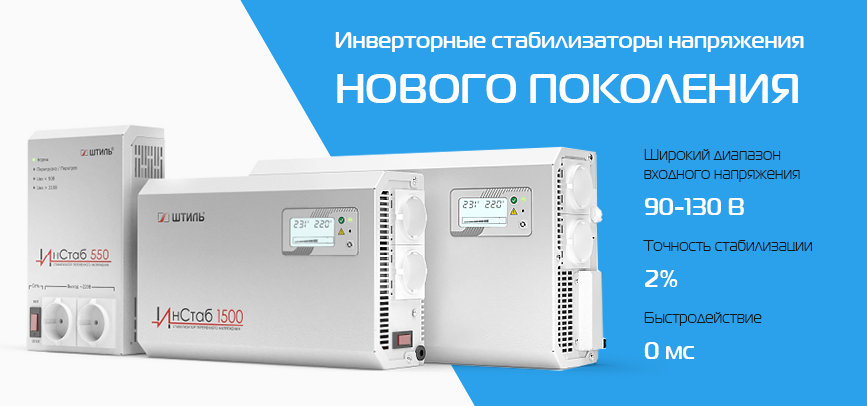
- Inverter power supplies. They feature highly accurate regulation thanks to a wide input voltage range. They can operate at low temperatures, are compact, and respond to voltage surges instantly. Disadvantages: expensive and incapable of handling heavy loads.
- Ferromagnetic. These are older types of equipment and are rarely produced today. Their advantages include high precision and the ability to operate at low temperatures. Their disadvantages include noise.
Any stabilizer will work for a washing machine, but it's best to choose reliable and expensive models, such as electronic and inverter models. In addition to the type of device, performance characteristics are also considered. Specifically, you should pay attention to at least five parameters.
- Number of phases. Three-phase equipment is required if the connection is rated for 380V. For a 220V load, either one three-phase stabilizer or three single-phase stabilizers can be connected. The latter option is preferable.
- Load. This figure directly depends on the washing machine being connected. You should determine the total power consumption in watts and add it to the power consumption of other devices connected to the line. Then, add a 20% reserve to compensate for inrush currents. Be sure to look at the voltage deviation coefficient, which is equal to 1 in a 220V network, 1.69 for 130V lines, and 1.47 at 270V. The final value will serve as a starting point.
- Mode. Models with two operating modes are considered the best: bypass and stabilizer. The first mode delays equalization during "quiet" power conditions and activates automatically during network overload. This feature allows the device to operate longer.
- Overvoltage protection. This will help prevent the device from burning out if the voltage exceeds the maximum limit. For safety, the stabilizer will automatically shut down.
- Brand. It's recommended not to experiment, but to choose equipment from a trusted manufacturer. Brands that have proven themselves include Quattro, Lider, Shtil, Volter, EnergoTech, Progress, Wester, Resanta, Rucelf, Powercom, Sven, Soyuz, Energiya, Huter, Era, Suntek, and Ortea.
After reviewing the stabilizer's capabilities, we begin choosing the right equipment. Ideally, you should analyze the market, identify the "leaders," and compare their potential and specifications. A review of the best models can help in your search.
Powerman AVS 3000P
A relay stabilizer with a total power of 3 kW A. The device is single-phase, so it is suitable for use with a 220 V network. It is wall-mounted, cooled only by natural ventilation, weighs 7.2 kg, and measures 22 cm wide, 26 cm high, and 13 cm deep. It's also worth noting the operating temperature range: the Powerman should be operated between 0 and 40 degrees Celsius.
Regarding stabilization, the device operates with an accuracy of 8%. Compensation for fluctuations begins 7 ms after a failure is detected. With an efficiency of 98%, the model is considered highly efficient, consuming a minimum amount of energy to correct the electric current. Whether the Powerman AVS 3000P is compatible with a washing machine depends on the machine's power. This stabilizer is designed for the following potential:
- input voltage: operating – 110-260V, maximum – 90-275V;
- output voltage – 202-238V;
- input frequency – 50-60 Hz.
The Powerman stabilizer is quite safe to operate. It features protection against short circuits, overheating, overvoltage, and interference. The device's enclosure has an IP20 rating, allowing it to operate in humidity levels up to 95%.
Resanta ASN-12000/1-C
This single-phase, floor-standing relay stabilizer can regulate current in the range of 140V to 260V, producing an output of 202-238V. It responds to voltage surges within 7ms, with correction accuracy reaching 8%. The system also features a bypass function for safer operation in transit mode. Users will also appreciate the high apparent power of 12 kVA. A voltmeter is located on the front panel of the stabilizer, monitoring the input and output voltage. The output signal is supplied in the correct form, increasing the device's efficiency. Furthermore, the transformer efficiency reaches 97%.
The most effective stabilizers are considered to be those with an efficiency of 97%.
In terms of safety, Resanta is protected against short circuits, overheating, overvoltage, and interference. It also features forced-air cooling, which quickly and efficiently dissipates heat from the system's heating elements. Thanks to the ventilation system, the device can be used at temperatures from 0 to 45 degrees Celsius and humidity levels up to 80%.
ERA SNPT-5000-Ts
Another floor-standing relay stabilizer can be used to regulate the voltage supply to a washing machine on a 220V network. This single-phase device has a surge response accuracy of up to 8% within 20 ms. A digital voltmeter display is located on the front panel for monitoring the voltage. The specifications are as follows:
- input voltage – 140-260V;
- output voltage – 202-238V;
- Efficiency – 95%;
- frequency – 50-60 Hz;
- Full power – 5 kVA.

The ERA SNPT-5000-C requires a temperature range of 5-40°C and humidity up to 85%. It has an IP20 protection rating, and safety is also ensured by short-circuit, overheating, network overload, and interference alarms. The machine's owner will also appreciate the delayed start feature, which allows the washing machine to be stopped with maximum care for the electronics. The ERA is quite compact in size: 22 cm wide, 25.6 cm wide, and 35.2 cm deep. It weighs 9.5 kg.
Volter Smart-4 (3.5 kW)
This inverter stabilizer with an active power of 3.5 kW and a total power of 4.4 kVA is an excellent choice for a washing machine. It is a single-phase device with a high accuracy of response to voltage fluctuations—0.5%. It supports a bypass mode, which helps extend the life of the unit. Other features of the Volter Smart-4 include: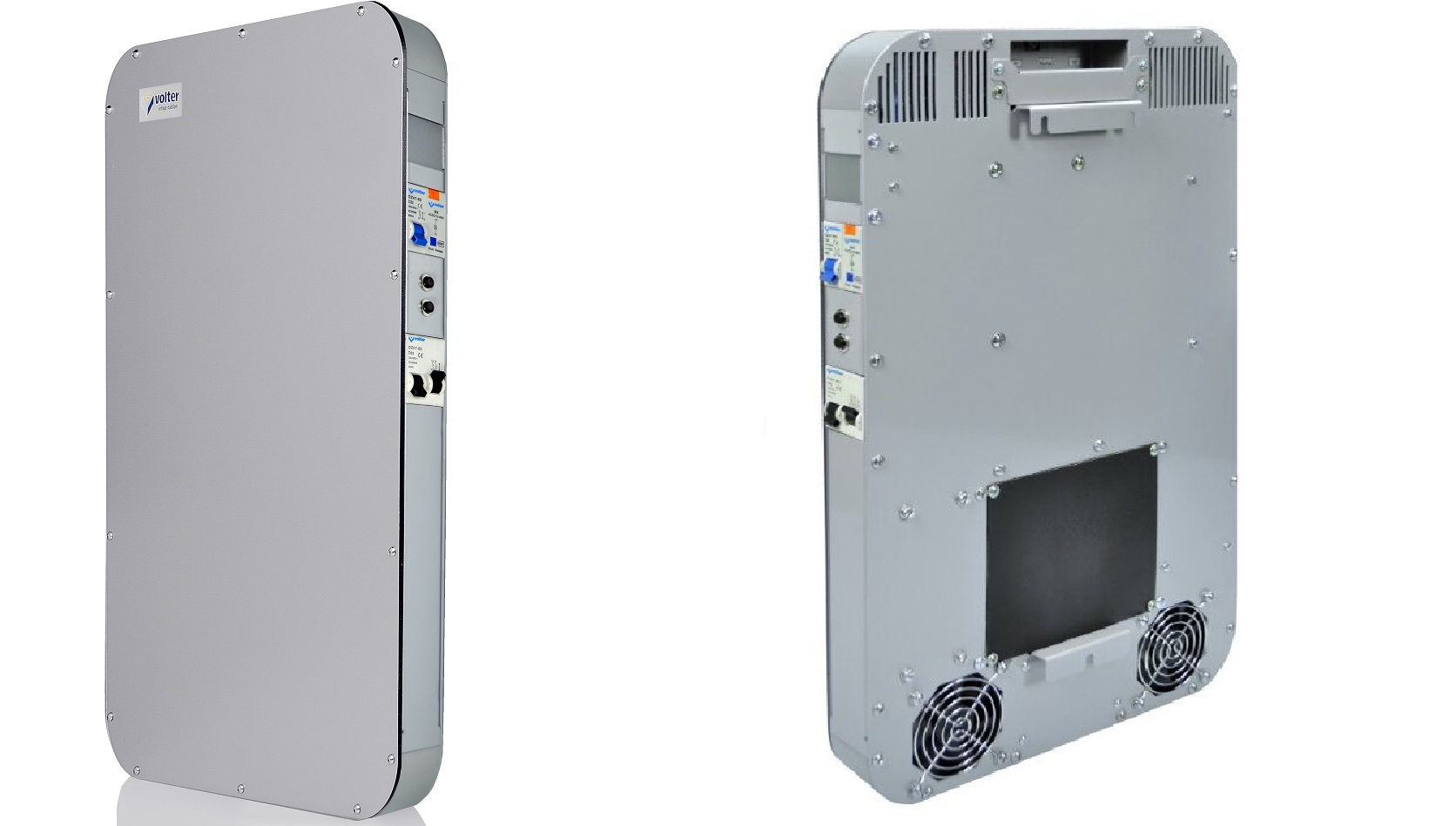
- input voltage: operating – 110-330V, maximum – 90-380V;
- output voltage – 219-221V;
- frequency – 47-53 Hz;
- noise level – 20 dB;
- protection class – IP
The Volter stabilizer is designed for versatile placement, suitable for both floor and wall mounting. It features cooling, a delayed start, and a digital indicator. Safety features are also thoughtfully designed, including protection against current leakage, overheating, overload, and interference. The device operates at 40-80% humidity and temperatures ranging from 1 to 40°C.
Interesting:
Readers' comments
Headings
Washing machine repair




For buyers




For users


Dishwasher




Add a comment